How I Finally Got Flexible — And Why It Changed Everything
Flexibility isn’t just for yogis or athletes — it’s a basic part of staying mobile, reducing stiffness, and feeling good in your body every day. I used to struggle with simple movements like tying my shoes or reaching for things without pain. After years of ignoring it, I finally made flexibility a priority. What I discovered wasn’t just about stretching — it was a total game-changer for my energy, posture, and overall well-being. It reshaped how I move, think, and care for myself. And the best part? It didn’t require hours at the gym or extreme contortions. Just small, smart, consistent choices that added up to profound change.
The Hidden Problem: Why Most People Ignore Flexibility
Flexibility is often misunderstood as something reserved for dancers, gymnasts, or people who can effortlessly fold themselves in half. But in reality, it is a fundamental component of everyday physical function. It refers to the ability of your muscles and connective tissues to lengthen and move through a full range of motion. Without it, even routine activities — bending down to tie a shoe, turning to check a blind spot while driving, or lifting a grocery bag — can become uncomfortable or even painful.
Modern lifestyles have made flexibility an afterthought. Many adults spend the majority of their day sitting — at desks, in cars, or on couches — which keeps muscles in a shortened position for long periods. This chronic lack of movement leads to tightness, especially in the hips, hamstrings, chest, and lower back. Over time, the body adapts to this restricted posture, and what once felt normal begins to feel out of reach. The irony is that the very behaviors designed for comfort — sitting, relaxing, convenience — slowly erode our physical ease.
Another major reason people neglect flexibility is misconception. Phrases like “I’m too old to stretch” or “I was never flexible” are common, but they are not truths — they are myths. Flexibility is not fixed. It is dynamic and responsive to how we use our bodies. While younger people may naturally have more pliability in their tissues, adults of any age can improve their range of motion with consistent, mindful practice. The belief that flexibility is only for the young or naturally gifted discourages many from even trying.
Consider everyday scenarios that signal declining flexibility: needing to hold onto something when getting up from the floor, feeling stiffness in the shoulders after computer work, or experiencing lower back discomfort after standing for a short time. These are not inevitable signs of aging — they are signs of underused movement. When flexibility is ignored, the body compensates in ways that can lead to imbalances, discomfort, and a gradual loss of independence. The problem isn’t that people don’t care about their bodies — it’s that flexibility is often invisible until it’s gone.
Why Flexibility Matters More Than You Think
Beyond the obvious benefit of being able to move more freely, flexibility plays a crucial role in long-term health and functional independence. At a biological level, muscles and connective tissues like tendons and fascia respond to how they are used. When regularly stretched and engaged through their full range, they remain supple and resilient. When neglected, they shorten and stiffen, which affects not just muscle function but also joint health and nervous system signaling.
The nervous system plays a key role in flexibility. It regulates muscle tone and reflexes that protect the body from overstretching. But when a muscle is chronically tight, the nervous system can become hypersensitive, triggering resistance even when movement is safe. This is why flexibility is not just about muscle length — it’s also about retraining the brain-body connection to allow greater ease of motion. Gentle, regular stretching helps calm these reflexes and improves neuromuscular coordination.
Poor flexibility increases the risk of injury. Tight muscles are more prone to strains, especially during sudden movements or physical activity. For example, tight hamstrings can pull on the pelvis, altering spinal alignment and contributing to lower back pain. Similarly, tight hip flexors from prolonged sitting can tilt the pelvis forward, leading to postural imbalances that affect walking, standing, and even breathing. Over time, these small dysfunctions accumulate, making everyday movement less efficient and more taxing.
There are also secondary health benefits linked to improved flexibility. Better circulation is one. When muscles are relaxed and elongated, blood flow improves, delivering oxygen and nutrients more effectively while helping remove metabolic waste. This can reduce muscle fatigue and speed up recovery after physical effort. Additionally, people who practice regular stretching often report better sleep quality. The act of slowing down, focusing on breath, and releasing tension signals the nervous system to shift into a restful state, making it easier to fall and stay asleep.
Perhaps the most important reason to prioritize flexibility is its role in healthy aging. As we grow older, maintaining mobility becomes essential for independence. The ability to bend, reach, squat, and balance safely determines how well we can perform daily tasks — from gardening to playing with grandchildren. Research consistently shows that adults who maintain or improve their flexibility are more likely to stay active, avoid falls, and enjoy a higher quality of life in later years. Flexibility, in this sense, is not a luxury — it is a foundation for long-term vitality.
My Turning Point: Realizing I Needed to Change
The moment I knew I had to do something came on an ordinary Tuesday morning. I bent down to pick up a dropped spoon, and a sharp twinge shot through my lower back. It wasn’t a serious injury, but it startled me. I stood there, one hand on the counter, wondering how such a small movement could cause so much discomfort. I was only in my early 40s, and yet I felt like my body was aging faster than I was.
That incident wasn’t isolated. I had noticed other signs — stiffness when getting out of bed, aching shoulders after a day of computer work, and an increasing reliance on my hands to push myself up from chairs. I used to walk briskly, but now I found myself slowing down, avoiding stairs, or hesitating before bending. I didn’t think of myself as unhealthy — I ate reasonably well and walked occasionally — but clearly, something was off.
The emotional impact was just as significant as the physical one. I felt frustrated, even embarrassed. I didn’t want to be the person who groaned every time she stood up. I worried about what it might mean for the future. Would I lose the ability to keep up with my kids? Would simple joys — like hiking or dancing at a family wedding — become impossible? The fear of losing independence was real, and it hit me harder than I expected.
That’s when I decided to stop dismissing flexibility as something unimportant or too difficult. I wasn’t doing this to look a certain way or achieve an Instagram-worthy pose. I wanted to move without pain. I wanted to feel capable. I wanted to trust my body again. My motivation wasn’t vanity — it was dignity, comfort, and freedom. The first step wasn’t a dramatic change; it was simply admitting that I needed to pay attention. And that small shift in mindset made all the difference.
The Simple Shift: What Actually Worked for Me
I started with one principle: consistency over intensity. I realized that stretching for five minutes every day was far more effective than an hour-long session once a week. High-intensity workouts had never worked for me long-term, but small, manageable habits did. I focused on building a routine that fit into my life, not one that disrupted it.
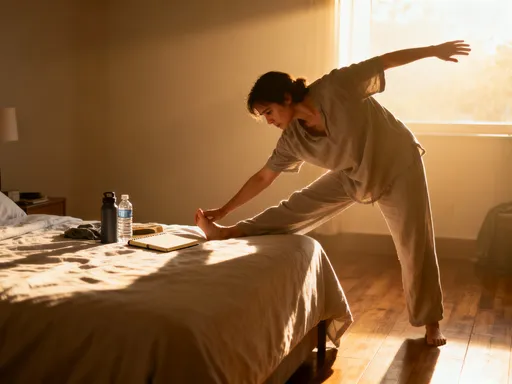
My approach centered on three key practices: daily dynamic warm-ups, post-activity static stretching, and mindful movement. In the morning, I began with a five-minute routine that included gentle leg swings, arm circles, and torso twists. These dynamic movements warmed up my muscles and prepared my body for the day. I didn’t need special equipment — just a bit of floor space and a willingness to show up.
Throughout the day, I incorporated small stretches during natural breaks. While working at my desk, I paused every hour to do seated hip openers — crossing one ankle over the opposite knee and gently leaning forward. I also practiced shoulder rolls and neck stretches to counteract computer posture. These micro-moments added up, preventing stiffness before it started.
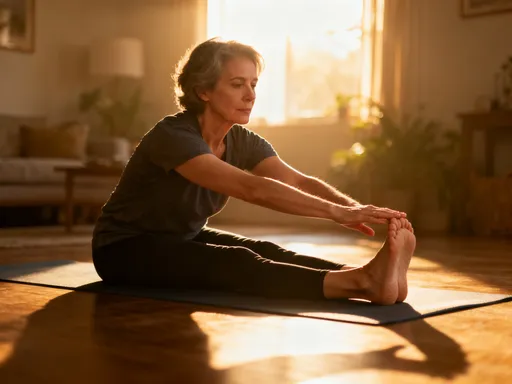
In the evening, after dinner or before bed, I did static stretches. I focused on areas that felt tight — hamstrings, calves, hips, and lower back. I held each stretch for 30 to 60 seconds, breathing deeply and relaxing into the sensation. I used a yoga mat for comfort and sometimes added a foam roller to release tension in my thighs and back. The key was not to push hard, but to create space — to let the muscle release naturally over time.
Breath became an essential tool. I learned that shallow breathing creates tension, while slow, deep breaths signal the nervous system to relax. By syncing my breath with movement — inhaling to prepare, exhaling to deepen a stretch — I was able to go further with less effort. This wasn’t just physical; it was meditative. Those quiet moments of stretching became a form of daily mindfulness, a way to reconnect with my body and quiet my mind.
Common Mistakes (And How to Avoid Them)
When I first started, I made several mistakes — some common, some avoidable. The biggest one was overstretching. I thought that if a little stretching felt good, pushing harder must be better. I would bounce at the end of a stretch or force myself into positions that didn’t feel right. This led to soreness and, in one case, a pulled muscle. I quickly learned that flexibility is not about pain — it’s about awareness.
Bouncing, or ballistic stretching, can trigger the stretch reflex, causing muscles to tighten instead of relax. This increases the risk of injury and defeats the purpose of stretching. Instead, I switched to static stretching — holding a position steadily without movement. This allows the muscle to gradually release and adapt. The goal is not to force change, but to invite it.
Another mistake was inconsistency. There were weeks when I skipped stretching altogether — too busy, too tired, too distracted. But I noticed that after just a few days off, my body felt tighter, my movements stiffer. Flexibility is cumulative. It builds slowly, and it fades quickly without maintenance. This taught me that showing up matters more than doing everything perfectly.
I also neglected certain areas, especially those that didn’t feel obviously tight. My hips and thoracic spine were two such zones. I didn’t realize how restricted they were until I tried simple movements like twisting to look behind me or squatting comfortably. These hidden limitations were silently affecting my posture and balance. Once I started targeting these areas with specific stretches — like seated spinal twists and cat-cow movements — I felt immediate improvements in my overall mobility.
The solution to these mistakes was simple: listen to my body. Discomfort is normal, but sharp pain is a warning. Progress should feel gradual, not dramatic. I began tracking subtle improvements — like being able to reach further, hold a stretch longer, or move more easily — rather than chasing big milestones. Over time, this patient, respectful approach led to more sustainable results than any aggressive routine ever could.
How Flexibility Transformed My Daily Life
The changes didn’t happen overnight, but they were real. Within a few weeks, I noticed less morning stiffness. Getting out of bed became easier. I could bend down to tie my shoes without holding onto the wall. Walking felt lighter, more fluid. I didn’t realize how much tension I’d been carrying until it started to melt away.
One of the most unexpected benefits was improved balance. I used to wobble slightly when standing on one foot — something I hadn’t thought about until I noticed I could now do it steadily. Better flexibility in the hips and ankles contributed to greater stability, reducing my risk of tripping or falling. This gave me confidence, especially when walking on uneven surfaces or carrying things.
I also experienced better breathing. Tight chest and shoulder muscles can restrict the expansion of the ribcage, making breath shallow. As those areas loosened, I found I could take deeper, fuller breaths. This had a ripple effect — I felt calmer, more centered, and less prone to stress. The connection between physical ease and emotional well-being became undeniable.
My relationships improved too. I could play on the floor with my kids without wincing. I joined them in games that involved bending, reaching, and moving — things I would have avoided before. I even started taking longer walks, enjoying nature without worrying about soreness afterward. These moments weren’t just physical; they were joyful. Flexibility gave me back the ability to participate fully in life.
Perhaps the most profound shift was internal. I began to feel more connected to my body. I noticed how I held tension, how I moved, how I responded to stress. This awareness led to better choices — standing up straighter, taking breaks more often, moving with intention. Flexibility became more than a physical trait; it became a form of self-respect.
Making It Stick: Building a Sustainable Habit
The key to lasting change was making flexibility a habit, not a chore. I used habit stacking — linking stretching to existing routines. For example, I started doing a few seated stretches right after brushing my teeth in the morning. Because the brushing was already automatic, the stretch became part of the sequence. Over time, it felt odd to skip it.
I also set gentle reminders — a notification on my phone, a sticky note on my computer. These weren’t demands, just nudges. I kept a yoga mat visible in the living room, so it was easy to step onto it without thinking. The easier I made it, the more likely I was to do it.
Accountability helped too. I shared my goal with a close friend, and we checked in weekly. We didn’t compare progress — we just celebrated showing up. Knowing someone else knew about my routine made me more committed. For others, joining a gentle yoga class or using a stretching app can provide similar support.
I adjusted my routine for different phases of life. When traveling, I did shorter stretches in hotel rooms. When busy, I focused on just one area — like the hips or shoulders — for five minutes. The goal wasn’t perfection, but continuity. Even on hard days, doing something small kept the habit alive.
I also learned to celebrate non-scale victories. I didn’t measure success by how far I could reach, but by how I felt. Could I get up from the floor easily? Could I reach the top shelf without straining? Could I walk without stiffness? These were the real milestones. Each one reminded me that I was investing in my future self — a self that would move with ease, confidence, and joy.
Flexibility became an act of self-care, not punishment. It wasn’t about fixing flaws or meeting external standards. It was about giving my body the attention it deserved. It was a daily promise to move well, feel well, and live well. And that made all the difference.
Flexibility isn’t about touching your toes — it’s about reclaiming ease in your body and confidence in your movement. By making small, consistent changes, anyone can improve their range of motion and feel better every day. This isn’t a quick fix, but a lifelong upgrade to your health. Start where you are, be patient, and let your body surprise you.